Welcome to Christian Council of Nigeria (CCN)

Phone
Visit
24, Douala Crescent, Wuse Zone 5, Abuja, FCT.
Welcome to Christian Council of Nigeria (CCN)
24, Douala Crescent, Wuse Zone 5, Abuja, FCT.


By The Rev. Uruakpa Onyemaechi Charles, CCN Correspondent
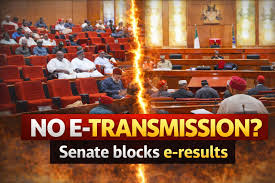
Abuja, Nigeria — The Christian Council of Nigeria (CCN) has raised a serious alarm over the Nigerian Senate’s recent vote to exclude mandatory real-time electronic transmission of results from the electoral framework. The Council warns that approving transmission in principle while rejecting it in real-time creates a dangerous loophole that threatens Nigeria’s democratic future
Speaking during a media chat with a CCN Correspondent, the General Secretary of CCN, His Lordship, The Rt. Rev. Evans Onyemara, Ph.D, described the Senate’s action as “a dangerous contradiction that opens wide the door to electoral fraud, rigging, and post-election violence.”

“A Direct Assault on Democracy”
The Rt. Rev. Onyemara did not mince words, stating that the decision of the National Assembly amounts to an invitation to anarchy and a deliberate weakening of public trust in the electoral process.
“You cannot claim to support electronic transmission and at the same time reject its real-time implementation,” he said. “That contradiction undermines transparency and sets Nigeria on a path of manipulated elections.”
According to CCN, Nigerians have consistently demanded a free, fair, transparent, and constitutionally guaranteed electoral system, anchored on compulsory real-time electronic transmission of results to prevent human interference.

Electoral Act and Constitutional Concerns
The CCN General Secretary pointed to Section 60(5) of the Electoral Act, 2022, which empowers the Independent National Electoral Commission (INEC) to electronically transmit election results in line with its guidelines. He argued that the Senate’s position weakens the intent of the law and defeats the very essence of electoral reform.
He also cited the 1999 Constitution of the Federal Republic of Nigeria (as amended), particularly:
Section 14(2)(a) – Sovereignty belongs to the people of Nigeria.
Section 14(2)(c) – The participation of the people in governance must be ensured.
Section 15(5) – The state shall abolish all corrupt practices and abuse of power.
“Any process that allows results to be altered before final transmission violates these constitutional principles,” Onyemara warned.
Call to the International Community
In the media interaction, the CCN General Secretary called on the United Nations (UN), United States of America (USA), European Union (EU), African Union (AU), and other international partners to closely monitor Nigeria’s electoral reforms and intervene diplomatically to safeguard democracy.
He also urged key Nigerian institutions and civic bodies—including the Nigerian Labour Congress (NLC), Trade Union Congress (TUC), Nigerian Bar Association (NBA), ASUU, NASU, NANS, and other Christian ecumenical bodies, to speak out now, stressing that silence would embolden anti-democratic forces.
Nigeria Falling Behind Africa
CCN expressed concern that while several African countries are adopting real-time electronic transmission to strengthen democratic credibility, Nigeria is moving backwards, despite its status as Africa’s largest democracy.
“It is shameful that Nigeria, the so-called Giant of Africa, is lagging behind in democratic innovation,” Rt. Rev. Onyemara noted.
CCN’s Final Warning
The Christian Council of Nigeria warned that the Senate’s rejection of mandatory real-time electronic transmission ahead of the 2027 general elections could trigger widespread loss of confidence in the electoral system and heighten political tension nationwide.
CCN reaffirmed its commitment to democracy, justice, and peace, insisting that only a transparent, constitutionally backed, real-time electronic transmission of results can protect Nigeria’s unity and democratic stability.


Leave a Reply