Welcome to Christian Council of Nigeria (CCN)

Phone
Visit
24, Douala Crescent, Wuse Zone 5, Abuja, FCT.
Welcome to Christian Council of Nigeria (CCN)
24, Douala Crescent, Wuse Zone 5, Abuja, FCT.

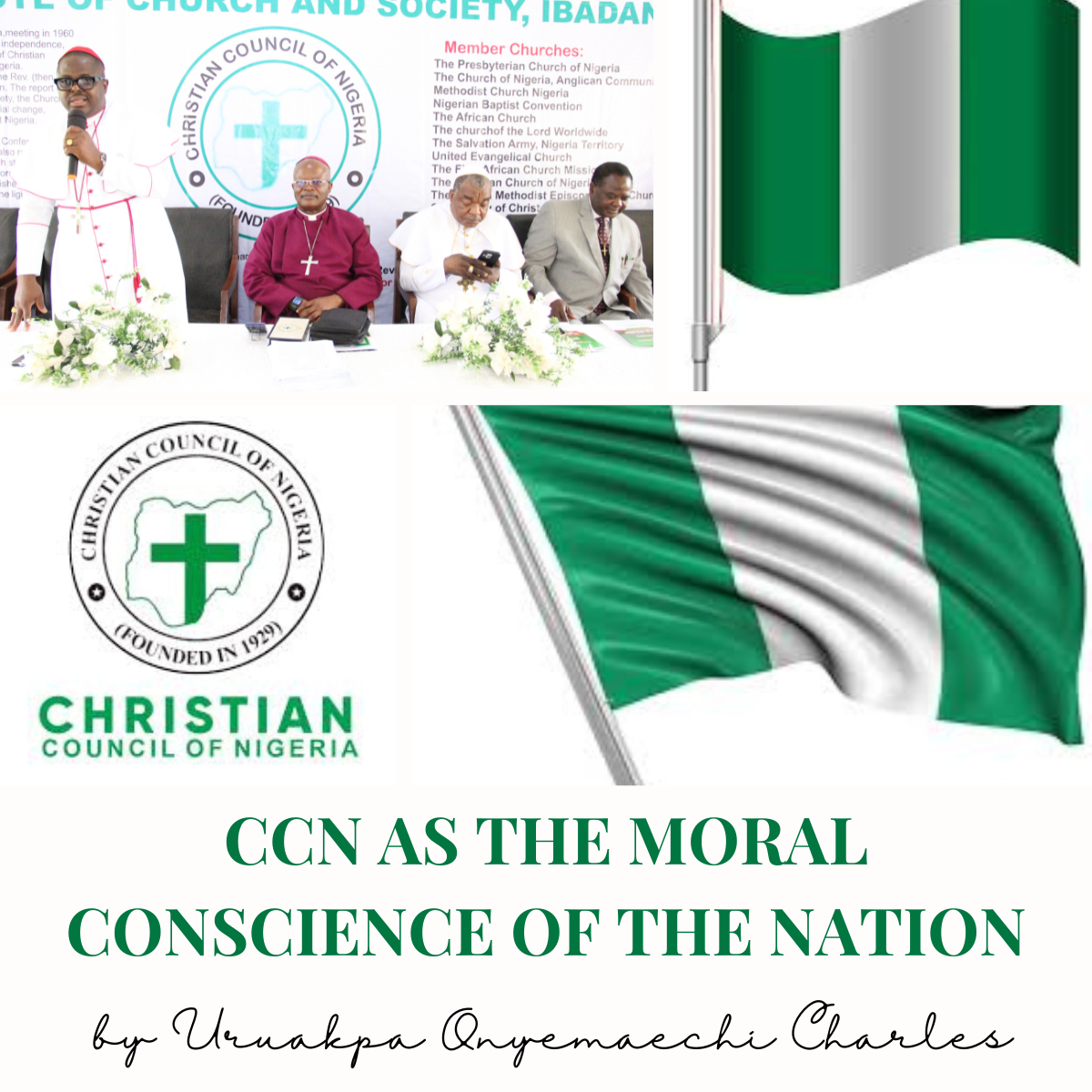
When democracy falters, the voice of conscience must rise. In Nigeria’s long and often turbulent democratic journey, the Christian Council of Nigeria (CCN) has stood not as a partisan actor, but as a moral sentinel—calling power to order, reminding the nation of God’s demand for justice, and insisting that governance must serve the dignity of all.
From colonial rule to independence, from military interregnums to democratic transitions, CCN has consistently occupied a unique space where faith meets public responsibility. Its role has never been to seize political power, but to shape the moral environment in which power is exercised.
Established in 1929, the Christian Council of Nigeria is Nigeria’s foremost ecumenical body, bringing together diverse Christian traditions under the prayer of Christ: “That they may all be one” (John 17:21). This unity has given CCN credibility and moral authority—essential tools in its engagement with Nigeria’s democratic process.
In every era, CCN has understood democracy not merely as elections or institutions, but as a moral project—one rooted in justice, equity, accountability, and the sanctity of human life. Where these values are threatened, CCN has spoken with prophetic clarity.
As Nigeria approached independence, CCN played a formative role in shaping civic awareness among Christians. Through teachings, communiqués, and public engagement, the Council emphasized:
CCN helped nurture a political culture that recognized democracy as compatible with Christian ethics—where authority is accountable to God and the people.
Nigeria’s democratic journey has been punctuated by military coups, authoritarianism, and constitutional disruptions. During these dark chapters, CCN emerged as a nonviolent moral force, consistently advocating:
Rather than retreat into silence, CCN issued courageous statements, engaged authorities, and aligned with other faith and civil society actors to demand justice and national reconciliation. This posture affirmed the Church’s biblical mandate to be “the light of the world” and “the salt of the earth” (Matthew 5:13–16).
For CCN, democracy does not end at the polling unit. It extends to how citizens are treated daily—how lives are protected, voices heard, and resources shared. Consequently, CCN’s democratic engagement has focused strongly on:
Through advocacy and dialogue, CCN has reminded Nigeria that there can be no democracy without justice, and no peace without equity.
In today’s Nigeria—marked by insecurity, economic hardship, and declining public trust—CCN’s role has become even more critical. The Council continues to engage:
Under the administrative leadership of The Rt. Rev. Evans Onyemara, PhD, CCN has strengthened its engagement with democratic institutions while remaining firmly anchored in Scripture and ecumenical principles.
CCN does not align with political parties; it aligns with truth. It does not campaign for candidates; it campaigns for justice, fairness, and righteousness—the very foundations of stable democracy.
Nigeria’s democracy will rise or fall on moral foundations. Institutions alone cannot sustain it; values must. This is where CCN’s contribution remains indispensable.
By offering a united Christian voice, CCN:
In a fractured society, CCN stands as a bridge-builder. In times of fear, it speaks hope. In moments of abuse of power, it declares accountability.
The story of Nigeria’s democracy cannot be told without acknowledging the role of faith-based institutions—and among them, the Christian Council of Nigeria stands prominent.
As Nigeria continues its democratic journey, CCN remains committed to its calling: to be the conscience of society, the voice of unity, and a prophetic witness for justice, peace, and the fullness of life for all.
Democracy needs laws.
But it also needs conscience.
And for Nigeria, CCN has been—and must continue to be—that conscience.
Leave a Reply